Air cargo rarely gets the same attention as passenger travel, but it’s one of the more stable and steadily growing corners of the aviation industry — e-commerce, pharmaceuticals, and perishables all move by air in increasing volumes every year, and every one of those shipments needs people to classify, document, and move it correctly. If you’re weighing a career in air cargo management, this guide covers what the role actually involves, what qualifications you need, and how to get started.
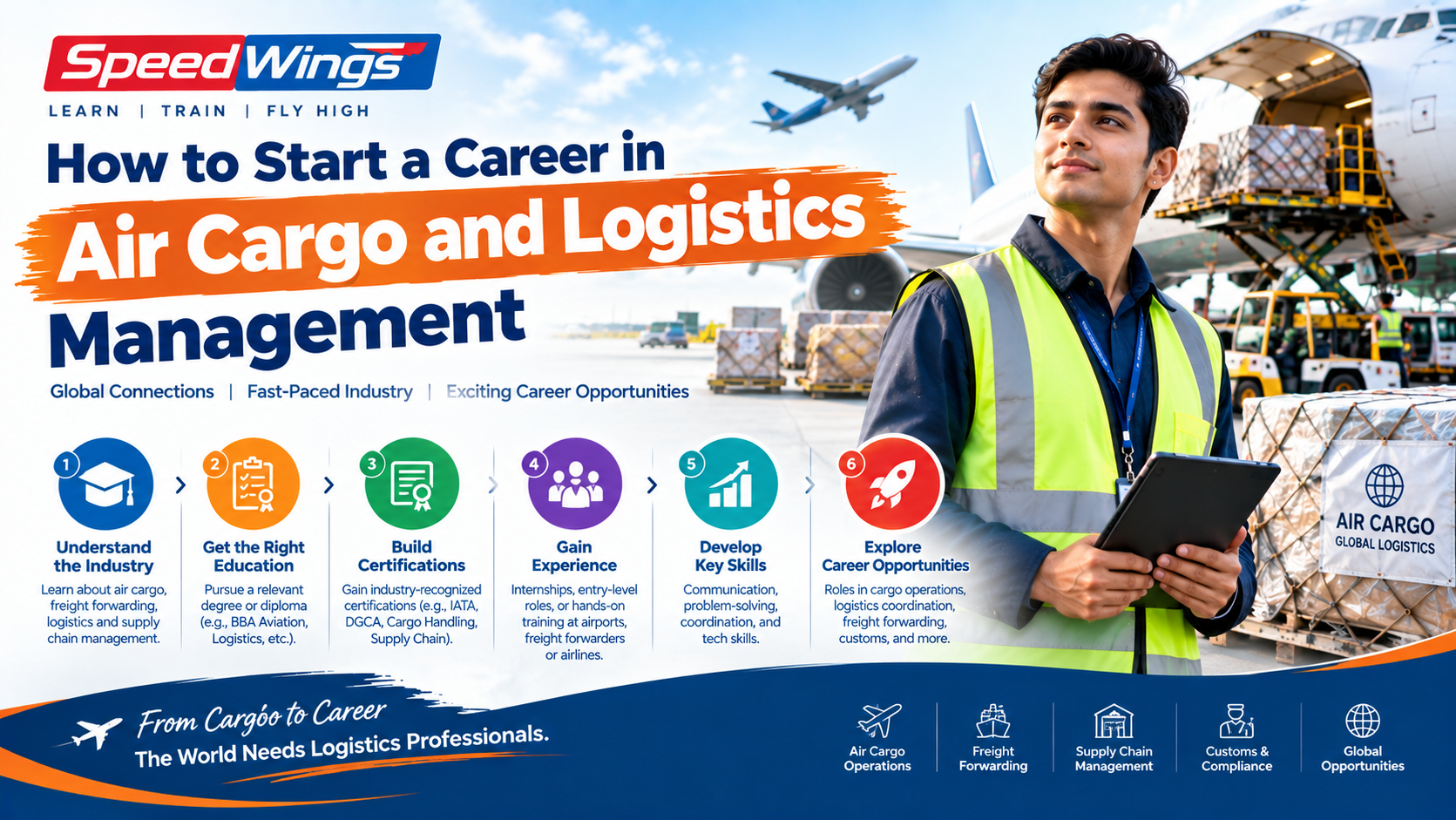
What Does Air Cargo Management Actually Involve?
Air cargo management sits at the intersection of logistics, documentation, and regulatory compliance. It covers the full journey of freight from the moment it’s booked for air transport to the moment it’s handed over at its destination — including cargo acceptance and screening, documentation and customs paperwork, dangerous goods handling where applicable, and coordination between shippers, airlines, and ground handling teams to keep shipments moving on schedule.
Unlike passenger-facing airline roles, cargo work is largely operational and process-driven. Accuracy matters enormously here — a documentation error or misclassified shipment can result in cargo being held at customs, rejected outright, or in the case of dangerous goods, create a genuine safety risk. That’s part of why structured training matters more in cargo than in many other entry-level aviation roles.
What Qualifications Are Needed for Air Cargo Jobs?
For most entry-level air cargo roles in India, you don’t need a university degree — a 12th-grade qualification combined with the right certification is generally enough to get started. What you do need is role-specific training, typically covering:
- Air cargo and freight forwarding fundamentals — how shipments are booked, documented, and tracked through the air cargo supply chain.
- Dangerous Goods Regulations (DGR) certification — required for any role that involves handling, accepting, or documenting hazardous cargo, and generally expected even for general cargo roles since dangerous goods can appear across many shipment types.
- IATA cargo-specific training — courses covering reservations, documentation standards, and cargo handling procedures used industry-wide.
- Customs and documentation basics — understanding how shipping documents, customs declarations, and airway bills are prepared and verified.
Beyond formal qualifications, employers in this space also value attention to detail and comfort working with regulatory paperwork — since a large part of cargo work is making sure documentation is airtight before a shipment ever leaves the ground. A structured air cargo logistics course is usually the fastest way to build this combination of skills in one place, rather than trying to piece it together on the job.
Is Air Cargo Management a Good Career?
For most people who complete the right training, yes — and for a few specific reasons:
- Steady, growing demand. Air freight volumes have grown consistently alongside e-commerce and global trade, and unlike some passenger-side roles, cargo demand isn’t as tightly tied to travel seasonality.
- Clear specialization value. Because DGR and cargo documentation require specific certification, qualified candidates tend to face less competition than in more generalist entry-level roles.
- International portability. Cargo and logistics qualifications built around IATA standards transfer well to freight forwarding and airline cargo roles outside India, since the documentation and handling standards are largely consistent globally.
- Progression into supply chain and logistics management. Cargo operations experience is a genuine stepping stone into broader supply chain and logistics management roles, which tend to offer more responsibility and better long-term growth than entry-level operational positions.
The trade-off worth being upfront about: cargo work is detail-heavy and process-driven by nature, which suits people who are comfortable with documentation, compliance, and precision — it’s a different day-to-day than more people-facing airline customer service roles.
What Is the Scope of Logistics and Supply Chain Management?
Air cargo is really one entry point into the much larger field of logistics and supply chain management, which covers how goods move from origin to end customer across multiple transport modes — air, sea, road, and rail — along with warehousing, inventory management, and distribution planning.
The scope here has expanded significantly in recent years, driven largely by e-commerce growth, global manufacturing supply chains, and increased demand for fast, reliable freight movement. Career paths within logistics and supply chain management range from operational roles (cargo agents, warehouse coordinators, freight documentation staff) to management-track positions (supply chain analysts, logistics managers, procurement and distribution planners) for those who combine operational experience with further qualifications like a diploma or degree in logistics and supply chain management.
For someone starting out, air cargo operations is often a practical and specific entry point into this broader field — it teaches the documentation discipline, regulatory awareness, and operational coordination skills that carry over directly into wider supply chain roles later on.
What Does an Air Cargo Agent Do?
An air cargo agent handles the day-to-day operational work of moving freight by air. Typical responsibilities include:
- Booking and reserving cargo space with airlines based on shipment size, weight, and destination.
- Preparing and verifying documentation, including airway bills, customs paperwork, and shipper’s declarations for dangerous goods where relevant.
- Classifying shipments correctly, particularly identifying and flagging any dangerous goods that require special handling and documentation.
- Coordinating with ground handling and airline teams to ensure cargo is accepted, screened, and loaded on schedule.
- Tracking shipments and resolving issues like delays, documentation discrepancies, or customs holds as they arise.
It’s a role that blends customer coordination (working with shippers and freight forwarders) with strict procedural compliance (getting documentation and classification exactly right) — which is why cargo-specific training, rather than general customer service training, is what employers typically look for when hiring into this role.
Getting Started
If a career in air cargo management sounds like the right fit, the practical starting point is a structured cargo management diploma or air cargo logistics course that combines cargo documentation, DGR certification, and IATA-standard procedures in one program — rather than trying to acquire dangerous goods certification and cargo fundamentals separately. Look specifically for programs that are IATA-authorized and, if training in India, DGCA-approved, since that combination is what makes your certification both immediately employable domestically and portable if you want to move into international freight forwarding or supply chain aviation jobs later.
From there, cargo operations experience — even at entry level — tends to open doors into the broader logistics and supply chain field over time, making it a reasonable long-term career bet rather than just a first job.